

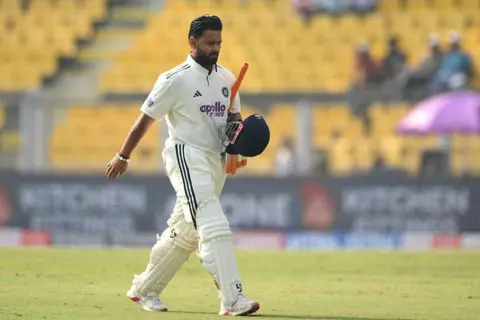
The Indian cricket team's unexpected 0-2 defeat to South Africa in the just finished red-ball series has plunged the side into crisis.
In the final match, South Africa gave India their heaviest Test defeat by runs, against all odds. This represented the Proteas' initial series triumph in India in a quarter-century and India's second defeat at home in just a year after a 12-year unbeaten run.
The momentum gained during the previous half-year has largely dissipated and the careers of multiple squad members - along with head coach Gautam Gambhir - are under scrutiny.
Early Optimism Vanishes
The emerging side's commendable display in the UK this summer, under a new captain, indicated a successful handover post the near-simultaneous retirements of stalwarts R Ashwin, Rohit Sharma, and Kohli.
A facile 2-0 victory over the Windies at the beginning of the home campaign enhanced that perception, before the Proteas arrived to deliver a crushing loss.
India were a tad unfortunate that leader Shubman Gill was injured quickly in the initial match and was ruled out in the contest. However, that does not excuse or justify the team of the terribly sub-par performance in the two games against South Africa.
Several established players suffered, and several players eyeing long red-ball careers were revealed to be still inadequate - in skill or mindset - for the format.
A Troubling Pattern
This was the second clean sweep in home conditions suffered by India in just more than a year. Last year, little-fancied New Zealand had secured a remarkable 3-0 triumph which effectively cost India a berth in the WTC final.
The fresh failure to South Africa threatens to derail India's hopes of qualifying for the decider of this cycle too.
After being third in the WTC table before the series, the side have fallen to number five. Although nine further games are still to come, a majority are against the Aussies. Typically, competing on home turf would be a huge advantage - even when facing the powerful Australians. However the debacles against the Kiwis and the Proteas offer no room for that confidence.
Roots of the Decline
India's weakness in the longer format has been clearly revealed. Nevertheless, why India have struggled so much in Tests at home in recent times is continues to confuse.
In the 21st century, the Indian cricket team were regarded as unbeatable in Test cricket at home. In hot, humid conditions and on tracks that assisted spinners and benefited their players, the hosts brooked no opposition. A rare failure, such as in 2012-13 against England, was viewed as an exception.
Now, India seem vulnerable on home turf.
Against New Zealand in last year and the Proteas this year, the home side were beaten at their own game. The tracks they prepared to suit their strengths backfired spectacularly, as the opposition used them more effectively, surpassing India's batsmen and bowlers when it was most crucial.
What Happened?
A few experts argue that India is failing at home because domestic pitches have been changed from turners to fast tracks to prepare players to do well abroad.
Some point out that the Indian Premier League (IPL), in which several international stars play, has reduced the mystery and hardship home wickets would pose to them earlier.
While there is validity in both analyses, it fails to account for why India's performances on home soil have witnessed such a dramatic drop.

Multiple Failings
The majority of ex-cricketers identify a complicated issue, not only a few causes.
Analysts and squad members have highlighted multiple deficiencies following India's humiliating loss to the Proteas: underestimating the opposition, lack of preparation, poor choices, excessive self-belief, frequent changes of the starting eleven, and favoring white-ball over Test cricket.
This was clear in the showings of the squad.
Members such as Rishabh Pant and Yashasvi Jaiswal, of whom high hopes were held, suffered for their lack of application, while Sudarshan, Nitish Kumar Reddy, and Jurel - who were hoping to secure their position in the squad - were found wanting in ability and attitude, facing the fallout for their nonchalant approach.
A small number - Jadeja, Bumrah, Kuldeep Yadav, Siraj and Sundar - did justice to their ability and standing - but inadequately to claim wins.
Management Questions
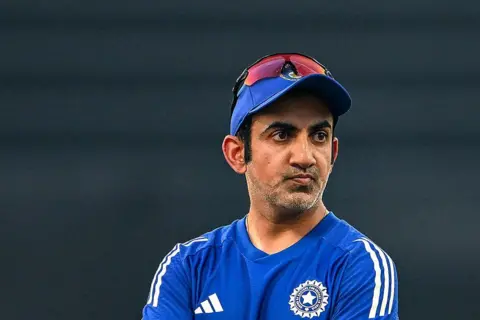
The post-mortem didn't spare just the players - team selectors and coaching staff were also criticized, spurred on by disappointed supporters and vocal past stars. Under focus of the scrutiny was mentor Gautam Gambhir.
During his post-series press

